Employee burnout: the data and the role of exercise
Turnover near 34% by early 2024, fatigue as the #1 reported emotion, and the evidenced link between exercise and cognition.
The numbers on Türkiye's working life are painting an increasingly sharp picture, and it's no longer just an HR topic. It's a board topic.
The data first
Let's start with published data, not feelings:
- Annual employee turnover in Türkiye rose from 24.45% in 2018 to around 34% by Q1 2024; 77% of leavers say they left for better pay and conditions (Frontiers in Psychology, 2025).
- The same study found 47% of employees on the verge of "quiet quitting", with 24% already disengaged.
- Across 100 companies and 150,000 employees, Meditopia measured Türkiye's overall wellbeing score at 54.8 out of 100, with fatigue as the single most-reported emotion (Meditopia Employee Wellbeing Report).
- According to Great Place to Work Türkiye's 2025 analysis, employees' number-one expectation from employers is now psychological wellbeing (GPTW Türkiye).
In short: a tired, disengaging workforce that expects wellbeing. Pay rises alone aren't solving it, even where the 77% go, the same cycle continues.
Why exercise is a performance tool, not an HR gesture
Exercise science has clear things to say about this picture:
- Movement is linked to cognitive performance. A study of endurance athletes showed positive associations between exercise-related biomarkers (BDNF and irisin) and cognitive skills (Belviranlı, Okudan, Kabak, Erdoğan et al., The Physician and Sportsmedicine, 2016). This is mechanism-level evidence from athletes, it doesn't transfer one-to-one to the office; but it shows what movement means for the brain.
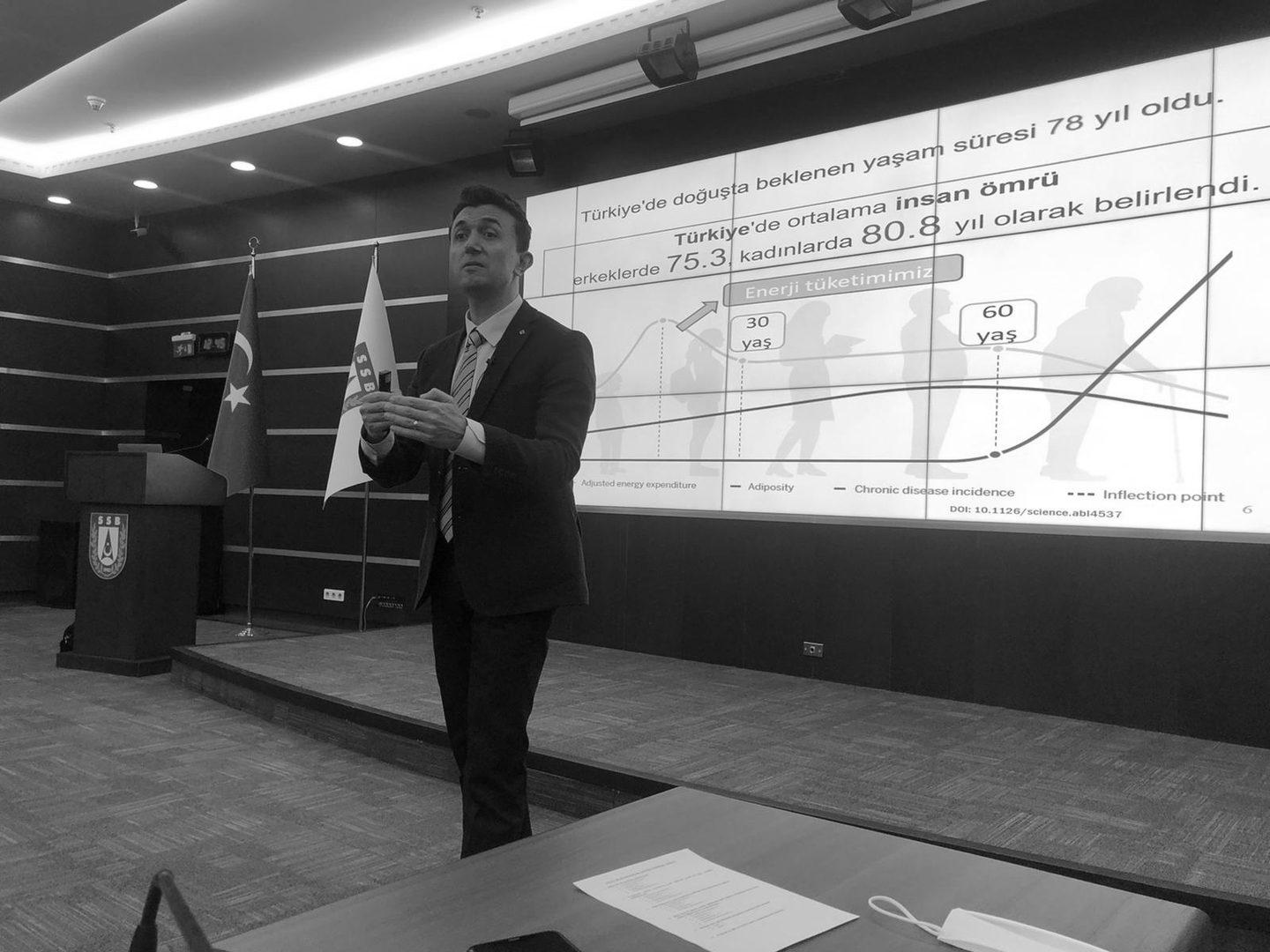
- Exercise can be prescribed for desk-based workers. Office-adapted, equipment-free protocols exist, one of the Turkish references in this space is Prof. Dr. Murat Erdoğan's Ofis Egzersizleri El Kitabı (Office Exercise Handbook, 2017).
- An unmeasured program is not a program. With validated instruments (e.g. the WHO-5 wellbeing index, the UWES engagement scale) and simple functional tests, a program's before/after can be reported in numbers.
A practical framework for organizations
Protocol, not slogans; measurement, not a motivational talk.
An evidence-based corporate program is built in three steps: baseline measurement (surveys + functional tests), intervention (movement, recovery, sleep and energy-management protocols), and re-measurement. The difference is reported in numbers; individual data is never shared, the employer only sees anonymized, aggregated trends.
The cost of waiting grows every quarter the burnout data worsens. Starting with measurement is as close as a single discovery call.
See how this works inside a company on our corporate wellness programs page, and start with desk-based teams through our office exercise guide.