Corporate sport program: what it is, how to build it
Corporate sport programs: formats, the evidence on absenteeism and productivity, and how to set one up so it can be measured.
A corporate sport program is the sum of an organization's regular, planned and measurable movement practices for its employees. The goal is neither a motivational talk nor a one-off event: the goal is to turn employee health and movement into an intervention you can track with data.
This post covers the formats a corporate sport program can take, what the literature actually says about absenteeism and productivity, how to measure it, and the mistakes companies make most often.
What is a corporate sport program?
A corporate sport program is a structured combination of physical activity, education and measurement components for an organization's employees. It can range from a single seminar to a year-long program tracked by regular measurement.
The critical distinction: a one-off "motivational" event is not a corporate sport program. The World Health Organization's recommendation of at least 150 minutes of moderate physical activity a week for adults (WHO, Physical Activity) is a sustained behavioral target; a single talk doesn't get you there.
What formats does a corporate sport program take?
Four formats are worth distinguishing:
| Format | Duration | When it fits | Measurability |
|---|---|---|---|
| Seminar | One session, 60-90 min | Building awareness, convincing leadership | Low, nothing beyond attendance is measured |
| Workshop | Half to full day | Giving team leads practical skills | Moderate, via before/after knowledge checks |
| Regular program | Weekly, 8-12 weeks or more | Building habits, embedding daily movement | Moderate to high, via participation and survey data |
| Measured pilot | 8-12 weeks, limited cohort | Presenting numbers to the board before an investment decision | High, via baseline-endline functional tests and validated scales |
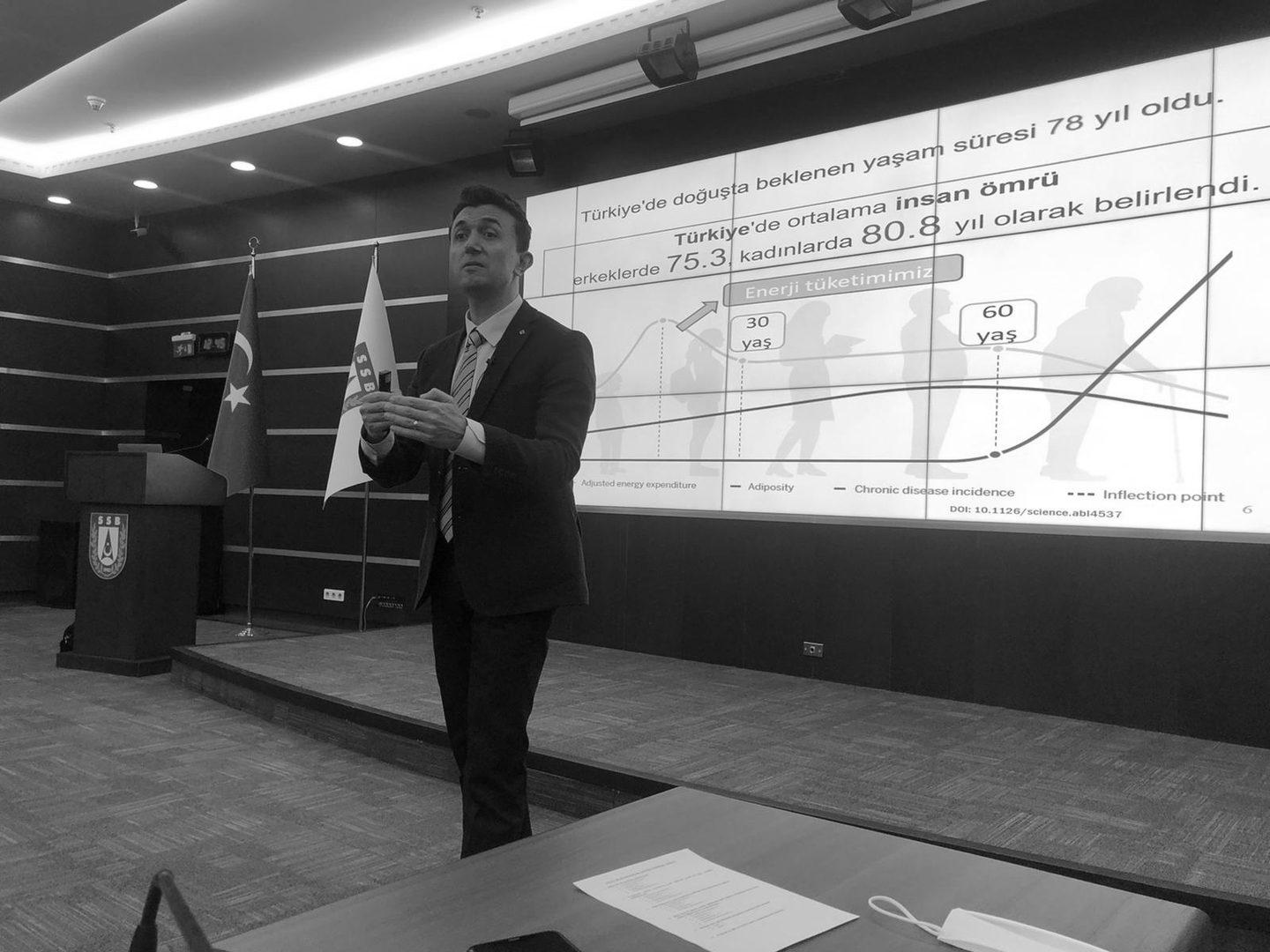
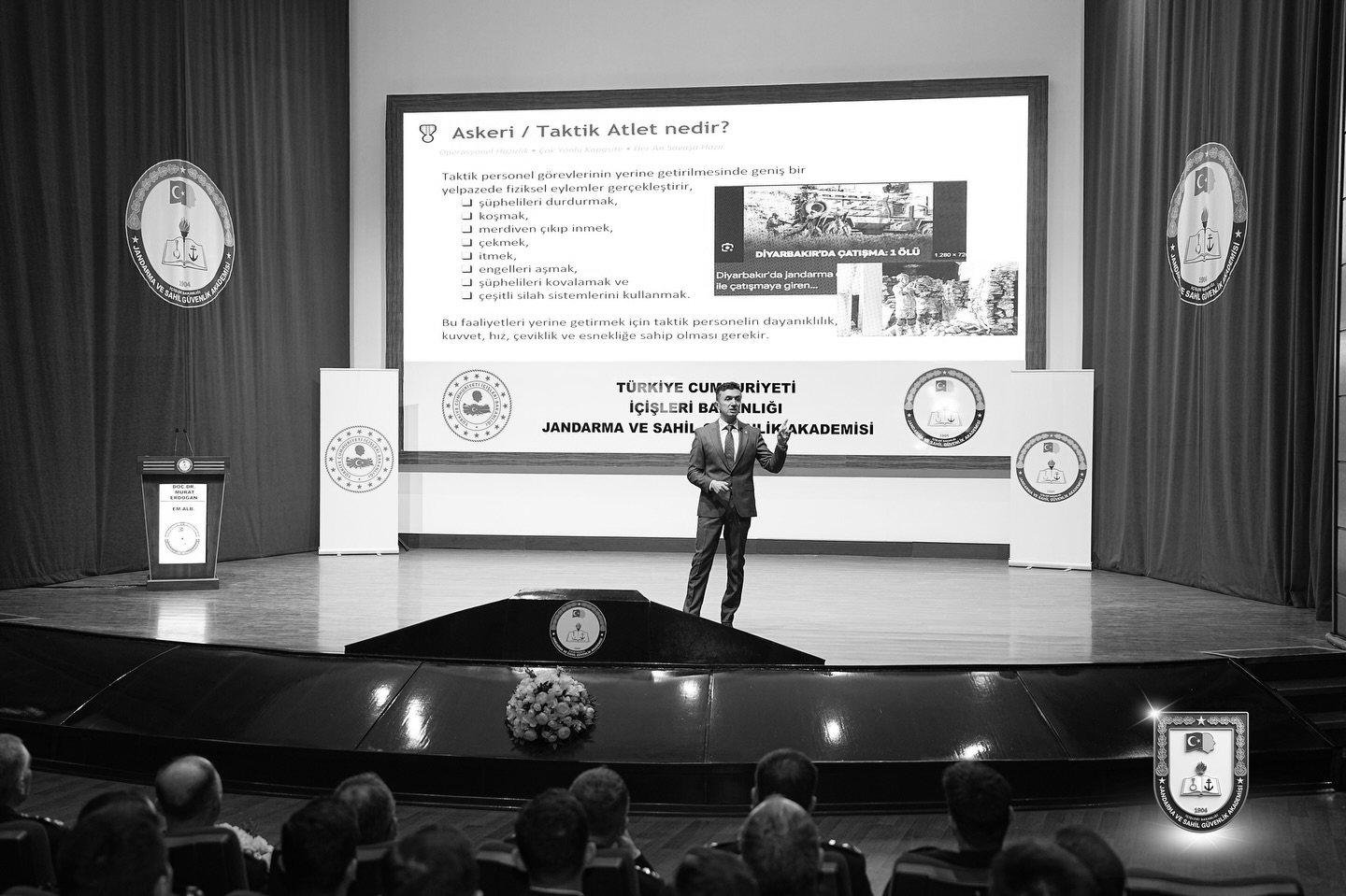
Prof. Dr. Murat Erdoğan's "Healthy Living and Exercise Strategies" session at SSB (13 April 2022) and the "Get Moving!" seminar at Başkent University (23 May 2024) are examples of the seminar format in this table: a first step for awareness and behavior change, not a guarantee of results on its own.
A distinction that often gets blurred: a corporate sport event (a company football tournament, a running club, an annual sports day) is not the same as a corporate sport program. An event is fun and engagement-building for participants, but it doesn't target a regular movement habit or a measurable health outcome. The two aren't mutually exclusive, most mature corporate programs eventually include both, but organizations that start a sport initiative for employees purely through events end up disappointed on health and performance goals.
Does a corporate sport program actually improve productivity?
Honesty matters here: the evidence is mixed.
A frequently cited calculation suggests workplace wellness programs return $3.27 in medical cost savings and $2.73 in absenteeism cost savings for every dollar spent (Baicker, Cutler and Song, Health Affairs, 2010). This figure is repeated often in marketing materials, but it's a meta-analysis summary drawn largely from older, heterogeneous studies.
A more recent and more rigorously designed randomized controlled trial paints a different picture: across 32,974 employees, workers at sites with access to a corporate wellness program significantly increased exercise and weight-management behaviors, but after 18 months there was no significant difference in absenteeism, job performance ratings, or health care spending (Song and Baicker, JAMA, 2019).
Systematic reviews confirm this uncertainty. A review of 39 studies on workplace nutrition and physical activity interventions found significant improvement in work-related outcomes (absenteeism, performance, work ability) in only 14 of them, and the authors noted there wasn't enough consistency to run a meta-analysis (Grimani, Aboagye and Kwak, BMC Public Health, 2019). A separate 2025 review screening 40 randomized controlled trials found significant increases in physical activity levels in 26 of 32 studies (81%), but significant improvement in work outcomes (productivity, absenteeism) in only 7 of 16 studies (44%), and only 10% of the trials carried a low risk of bias (Zhang, Nie, Peng and Ren, Healthcare, 2025).
In short: the evidence that corporate sport programs make employees more active is strong. The evidence that this reliably translates into lower absenteeism or a measurable ROI is weak and inconsistent. If a vendor promises you a precise ROI figure, it's reasonable to ask which study it's based on.
Which outcomes does the evidence support, and which are oversold?
Reliable findings:
- Structured interventions reliably increase physical activity levels (Zhang et al., 2025).
- Exercise-related biomarkers have a mechanism-level link to cognitive performance (Belviranlı et al., 2016, in endurance athletes); this doesn't transfer one-to-one to the office, but it supports the physiological rationale.
Weak or inconsistent findings:
- A significant short-to-medium-term difference in absenteeism, job performance ratings, or health care spending (Song and Baicker, 2019).
- A generalizable, single "ROI multiplier" (the Baicker et al., 2010 figure is cited often but is contradicted by the 2019 randomized controlled trial).
This doesn't mean corporate sport investment isn't worthwhile; it means choosing the outcome you promise carefully. Employee movement, participation and subjective wellbeing are realistic targets; a guaranteed drop in absenteeism is not.
How do you measure a corporate sport program?
The framework we cover in You can't manage what you don't measure applies at corporate scale too: baseline measurement, intervention, re-measurement.
Practical steps for a corporate sport program:
- Baseline survey. A validated instrument (the WHO-5 wellbeing index or the UWES engagement scale) plus a short, voluntary health screen.
- Limited pilot cohort. Instead of the whole company, a volunteer group of 30-80 people in an 8-12 week measured program.
- Functional tests. Simple tests of flexibility, strength and endurance are repeated at the start and the end; results are reported only in aggregate and anonymized, never at the individual level.
- Re-measurement and decision. The same survey is repeated at the end of the pilot, the difference is reported in numbers, and leadership makes the scale-up decision from data.
This mirrors the three-step framework in our post on corporate burnout data: protocol, not slogans; measurement, not a motivational talk. Companies wanting to start at team level can begin with our office exercise guide, an equipment-free, ready-to-use protocol.
What mistakes do companies make most often?
- Stopping at a one-off seminar. Awareness is necessary but doesn't build a habit; seminars without a follow-up program or workshop lose their effect within a few months.
- Promising ROI without measuring. The evidence above is clear: there's no generalizable ROI figure, don't claim one before you've collected your own data.
- Mandatory participation. Voluntary participation is a precondition for both ethics and data quality; mandatory programs end up with low participation and unreliable data.
- No visible manager participation. Protocols without visible manager involvement don't survive week four.
- Sharing individual-level data. Sharing an employee's test and survey data at the individual level with the employer is risky both legally and for trust; data should always be anonymized and aggregated.
- Leaving ownership entirely to HR. The program is a measurable performance intervention, not an HR event; if goal-setting and budget decisions aren't owned at leadership level, pilot results never turn into a scale-up decision.
How does ME Consultancy build a corporate sport program?
We design your corporate sport program around these same four steps, matched to your organization's current maturity level: choosing the format (seminar, workshop, regular program, or measured pilot), baseline measurement, a limited pilot, and re-measurement. A record of trainings delivered at SSB, Başkent University and JSGA is on our what we've done page.
Frequently asked questions
How large does a team need to be for a corporate sport program to make sense?
It depends on the format. A seminar or workshop works for anywhere from 20 to 500 people; for a measured pilot, a volunteer cohort of 30-80 is recommended, since it's both manageable and large enough for a meaningful comparison.
Does a corporate sport program pay for itself through productivity gains?
Not as a blanket rule: the literature doesn't guarantee it (Song and Baicker, 2019). The program should be evaluated with your own data; the scale-up decision should rest on your pilot's result, not on a third party's ROI promise.
Is a corporate sport program the same thing as office exercise?
No. Office exercise is a narrower practice: short movement breaks done at the desk (see our office exercise guide). A corporate sport program is a broader framework, spanning multiple formats from a seminar to a measured pilot, plus a measurement component.
Where should a company start with a corporate sport program?
Not with a company-wide launch, but with a limited, voluntary pilot. Measuring at small scale and scaling with data produces a more reliable result than making a big promise up front.