Office exercise: a guide for desk-bound teams
Office exercise: two equipment-free routines (5 and 10 minutes), when to do them, who should be careful, and how companies turn this into training.
For an employee spending 8-10 hours a day at a desk, sedentariness isn't comfort, it's a compounding load. The good news: designed correctly, the office itself can become an exercise environment, no equipment, no changing clothes, fitting between meetings. This guide gives teams designing office exercise training both the scientific framing and a routine they can use immediately: when to do it, who should be careful, and how a company turns it from a one-off tip into a lasting habit.
Why does office exercise matter?
- The World Health Organization recommends at least 150 minutes of moderate physical activity weekly for adults (WHO, Physical Activity). A desk-bound week almost never reaches that on its own.
- Türkiye's workforce data sharpens the picture: across 150,000 employees, fatigue was the most-reported emotion, and physical-health support the most-requested benefit (Meditopia Report).
- Movement's link to cognitive function has been shown at mechanism level: exercise-related biomarkers (BDNF, irisin) were positively associated with cognitive skills (Belviranlı et al., 2016, in endurance athletes). This is athlete-level evidence, it doesn't transfer one-to-one to the office; but it supports the physiological rationale for movement.
What are the four principles of office exercise?
One of the Turkish references in this space is Prof. Dr. Murat Erdoğan's Ofis Egzersizleri El Kitabı (Office Exercise Handbook, 2017). Its approach can be summarized in four principles:
- Frequency beats duration. Not one 30-minute block, but short movement breaks spread through the day.
- Large muscle groups first. Hips, back and shoulder girdle, the areas desk posture loads most.
- No equipment required. Body weight, a chair and a desk are enough; any movement that requires changing clothes is unsustainable.
- Habits are built by design. Without calendar reminders, team rituals and visible manager participation, no protocol survives week four.
How do you do a 5-minute office exercise routine?
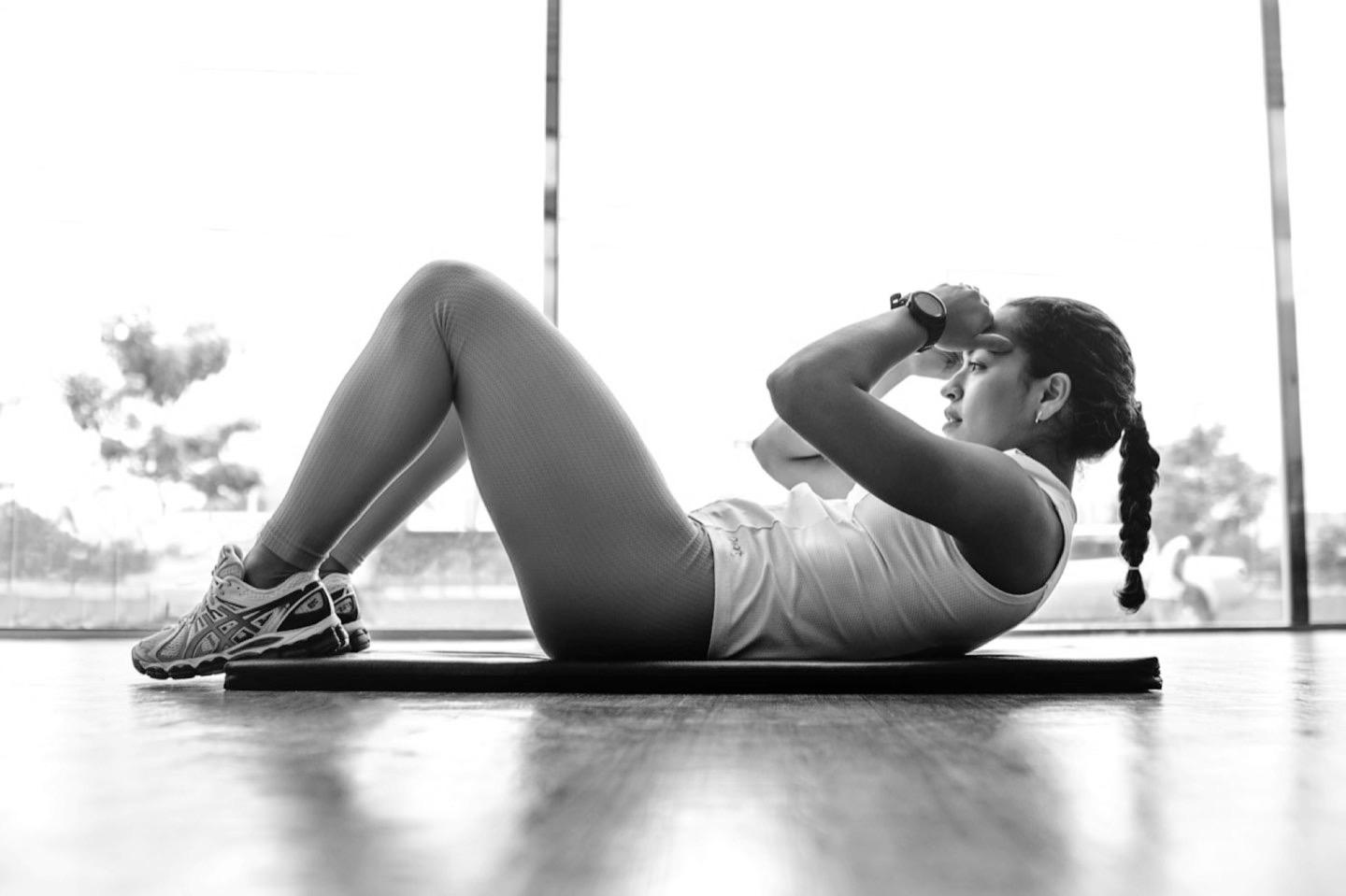
A sequence that fits between meetings, done at or beside the desk without standing up if needed. Hold time and repetitions follow the widely used ACSM exercise prescription guidance for healthy adults: each stretch held 10-30 seconds, repeated 2-4 times (Garber et al., ACSM Position Stand, Medicine & Science in Sports & Exercise, 2011).
| Movement | Area | Duration / reps |
|---|---|---|
| Seated neck side stretch (ear toward shoulder) | Neck | 15 sec each side × 2 |
| Shoulder circles (forward and back) | Shoulder girdle | 10 reps each direction |
| Seated trunk rotation | Upper back | 15 sec each side × 2 |
| Wrist stretch (arm extended, fingers pulled back) | Wrist, forearm | 15 sec each direction × 2 |
| Chair stand (squat) | Hips, legs | 10 reps |
Total time is about 4-5 minutes. No change of shoes or clothes required.
How do you do a 10-minute office exercise routine?
A somewhat fuller sequence for once in the morning or afternoon. It adds these movements to the 5-minute routine:
| Movement | Area | Duration / reps |
|---|---|---|
| Standing hip flexor stretch (one foot back, slight lunge) | Front of hip | 20 sec each leg × 2 |
| Chest and shoulder opener against a wall or desk | Shoulders, chest | 20 sec × 2 |
| Seated figure-4 hip stretch (ankle on opposite knee) | Outer hip | 20 sec each leg × 2 |
| Calf raise | Calves | 15 reps |
| Wall-supported upper back extension | Upper back | 20 sec × 2 |
Total time is 9-10 minutes. No rest is needed between movements, the sequence can flow continuously.
When and how often should you do it?
Two lines of evidence complement each other here:
- In an office-worker intervention, participants received hourly movement-break prompts; the intervention group took an average of 7.2 microbreaks a day, and perceived job stress dropped significantly over a 13-week follow-up (a medium effect size); subjective fatigue and energy scores, however, showed no significant difference between groups, and the sample was small (n=43) (Mainsbridge et al., Frontiers in Public Health, 2020).
- An expert consensus statement for desk-based work recommends gradually accumulating 2-4 hours a day of standing and light activity, spread through the day rather than in one block (Buckley et al., British Journal of Sports Medicine, 2015).
The practical takeaway: run the 5-minute routine roughly hourly, and the 10-minute routine once a day (morning or afternoon). That frequency is consistent with the current evidence and fits easily into an office schedule. The evidence for an effect on stress and perception is moderate; the evidence for an effect on fatigue and energy is still weak, and it's worth saying so plainly rather than overselling it.
Habits don't form without reminders. A fixed "movement break" block in the calendar app, a daily nudge in the team chat, or a desktop timer turns the hourly break from something forgettable into a routine. In the first two weeks, almost no one takes the break on their own without a reminder, that's principle four ("habits are built by design") in practice.
How does office exercise work alongside desk setup?
A movement break doesn't by itself compensate for a poor desk setup. Basic ergonomics, screen at eye level, forearms roughly parallel to the desk, feet flat on the floor, is a complementary layer that reinforces what the movement breaks do. Companies planning office exercise training usually pair the workshop with a short desk-setup check; the two look like separate topics but target the same postural load.
Who should be careful?
This routine is designed for generally healthy adults and is not a substitute for medical treatment or diagnosis:
- If you have an existing pain, injury, or are recovering from surgery in the neck, back, or wrist, check with your doctor before starting.
- If any movement causes sharp pain, stop immediately; mild tension is normal, pain is not.
- During pregnancy, movements requiring balance (squats, single-leg stretches) should be done with support or with medical clearance.
- If you experience dizziness, chest pain, or shortness of breath, stop exercising and seek medical evaluation.
How do companies turn this into training?
Individual good intentions don't produce organizational results. At company scale the working setup has three components: protocol (embedding the routines above in the team's calendar), education (a hands-on workshop connecting the why to the how), and measurement (baseline/end surveys plus functional tests, reported in aggregate). We cover how these three components scale into a full program in our corporate sport program guide.
If you don't measure a program, you'll never know whether it worked, and you'll never be able to tell the board.
A typical roadmap looks like this: a 60-90 minute introduction session with management, then a four-week trial of the 5- and 10-minute routines with a volunteer pilot team, then a simple before/after comparison using a participation and subjective-fatigue survey. Piloting at small scale before a company-wide mandatory rollout follows the same logic detailed in our corporate sport program guide: protocol, not slogans; measurement, not a motivational talk.
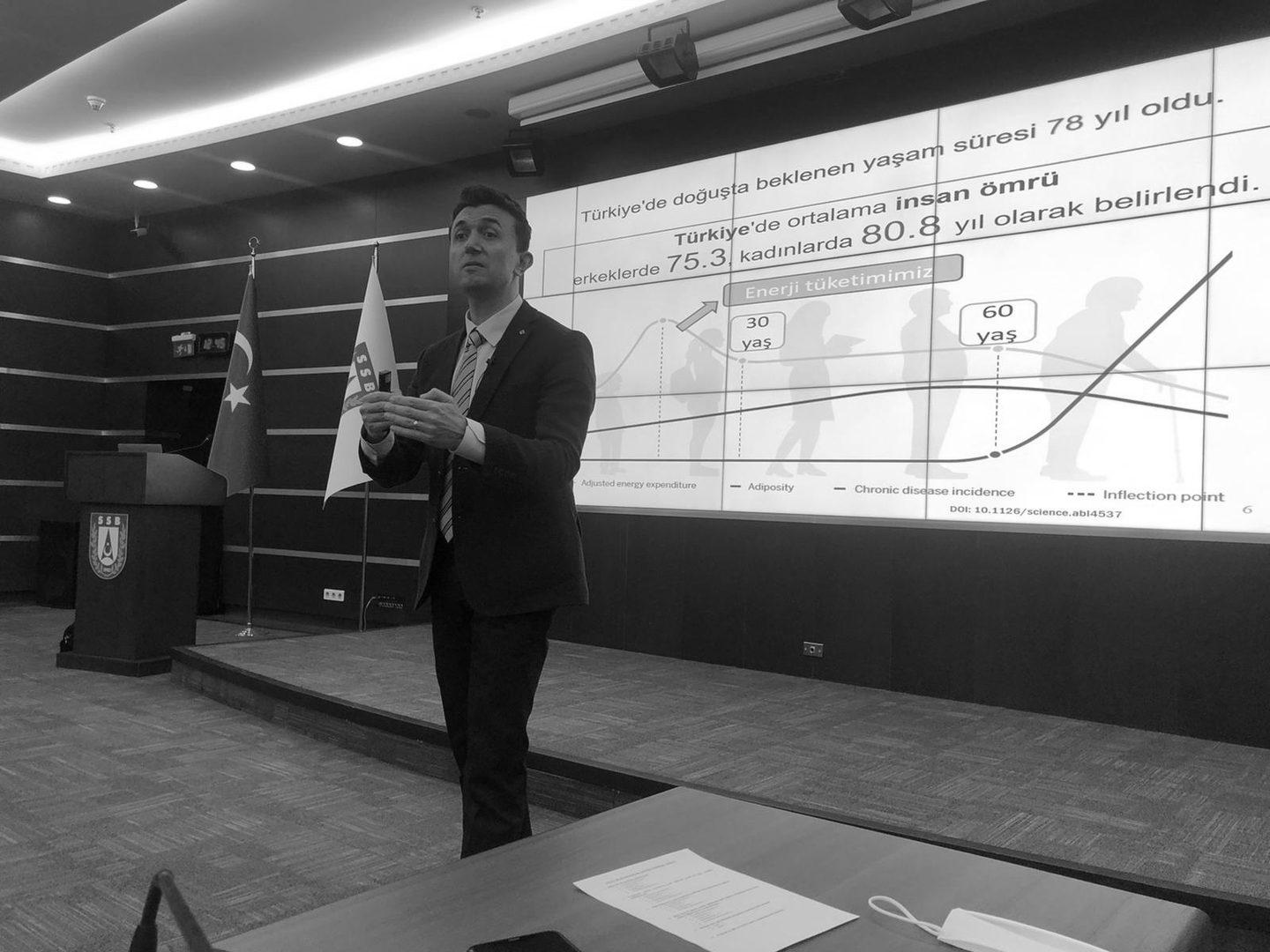
Within our corporate performance program we design this workshop around your team's actual working rhythm. A record of trainings including "Healthy Living and Exercise Strategies" at SSB and "Get Moving!" at Başkent University is on our what we've done page.
Frequently asked questions
Does office exercise actually reduce back and neck pain?
The mechanical rationale for short movement breaks reducing posture-related tension is solid, but we don't claim that this routine on its own "treats" pain. Persistent or severe pain should be evaluated by a doctor first.
How long does office exercise training take?
A hands-on workshop typically runs 60-90 minutes: a short scientific framing, a live demonstration of the routine, and a plan to embed it in the team's calendar. A one-off training doesn't build a habit, it needs to be backed by protocol and reminders.
Is the 5-minute or the 10-minute routine more effective?
They serve different purposes. The 5-minute routine is short enough to repeat hourly and prioritizes frequency; the 10-minute routine gives a fuller stretching and strengthening set once a day. The best result comes from using both together.
How do you know an office exercise program is working?
Participation rate alone isn't a sufficient indicator, since clicking a reminder doesn't mean behavior changed. You need to repeat the same short survey (perceived tension, energy, job stress) at baseline and again a few weeks later, and report the difference in numbers. We cover the general framework for this kind of measurement in You can't manage what you don't measure: baseline measurement, intervention, re-measurement.